

Online Wetness Indicator Printing Trends and New Requirements for Hygiene Functional Materials
2026-01-04
As hygiene products continue to evolve toward greater differentiation and enhanced user experience, wetness indicators have moved beyond a basic functional feature to become an important element of product communication and design. In recent years, the advancement of online wetness indicator printing has begun to significantly influence the development and application of hygiene functional materials, especially in terms of printability, stability, and process compatibility.
Wetness Indicators Are No Longer Just a Material, but a System Solution Traditionally, wetness indicators were applied through offline or secondary processes, with material development mainly focused on color-change performance. With the adoption of online wetness indicator printing, wetness indicator materials are now required to perform reliably within integrated production processes. This shift places higher demands on wetness indicator materials to integrate smoothly with graphics, maintain stability at high speeds, and remain compatible with multi-layer hygiene product structures. New Material Requirements Driven by Online Printing Processes Online printing and continuous coating processes introduce more comprehensive performance requirements for functional materials. In addition to consistent color response, materials must demonstrate excellent printability, adaptability to different substrates such as nonwovens and films, and strong compatibility with other functional coating materials. For hygiene products, this level of material performance is essential to support stable liquid management and reliable functional behavior throughout product use.
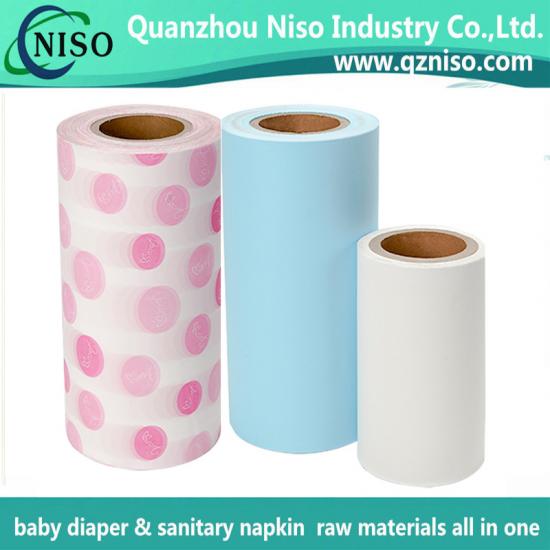
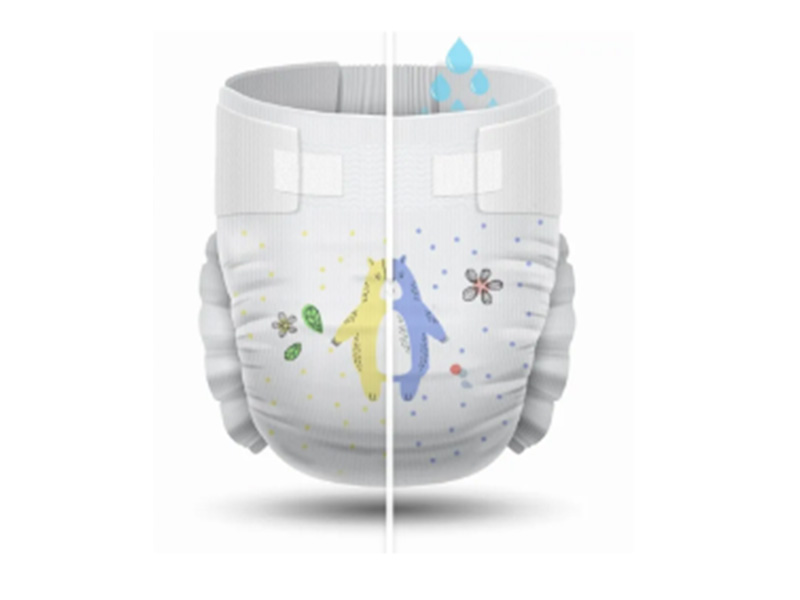
How Functional Materials Enable Greater Design Flexibility The wider adoption of online wetness indicator printing technology has also expanded design possibilities in hygiene products. Wetness indicators can now be applied as icons, integrated into full graphic patterns, or designed as zoned visual elements. As a result, wetness indicator application is becoming an integral part of the overall product appearance rather than a separate functional mark. This evolution requires functional materials for hygiene products to deliver high consistency, controllability, and repeatability during continuous manufacturing.
Industry Perspective: Functional Materials Are Becoming Process-Oriented From a material supplier’s perspective, a clear industry trend is emerging: the competitiveness of hygiene functional materials is increasingly defined by their compatibility with manufacturing processes. Future-ready materials will be designed specifically for process-compatible hygiene materials, supporting online printing, continuous production, and the combined use of multiple functional layers. In this context, material innovation is no longer limited to performance parameters alone, but extends to how effectively materials support the overall hygiene manufacturing ecosystem.